
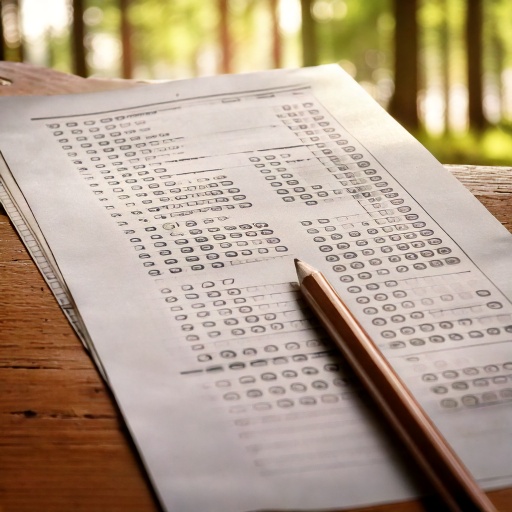
Many Brevard High students and staff are familiar with the school’s exam exemption policy, which states that if students meet certain requirements, they are not required to take “teacher-made” final exams for classes that do not have a state-mandated EOC or CTE exam.
The requirements state that to be exempt, a student must have a grade of an 80 or above in the class and no more than five absences and six tardies or early dismissals.
This policy was put in place after the COVID-19 pandemic around 2021 as an incentive to improve attendance, but has faced some controversy ever since.
Many students and staff have expressed mixed opinions about the issue. Some students feel as if the attendance incentive is unethical because of the obligation toward them to come to school even when they’re unwell.
“I don’t think it’s right. It shouldn’t be one or the other. My grandfather recently passed away and I was hesitant to miss school to attend his funeral because I didn’t want to take my exams,” junior Keargan Mitchell said. “I am now just below the requirement to not take my exams and if I were to get sick, I’m not sure what I would do.
“Some people care about being at school, but there’s too many people who abuse the policy that it’s not always an accurate representation of who deserves to be penalized and who doesn’t,” she added.
Another junior, Brooklyn Webb, shared her personal experience with the policy, saying, “I broke my arm and still came to school instead of taking time off to recover because I didn’t want to take my exams. I was in pain all day.”
Some people think the policy is great for the school, including Principal Mick Galloway. He says the policy is “absolutely effective” and that “so many people stay under five days” of absences in order to not take exams. He also said the policy has greatly increased attendance rates over the past few years.
Galloway says that for the students who are required to take an exam due to absences or other reasons, “the teacher-made exams are not that bad.”
And of course, some people are skeptical about it.
“It’s a good policy with a complex implementation,” said English and history teacher Morrey Davis. “On one hand, it clearly works, and we have one of the highest attendance rates in the state. But the drawbacks are that we see a lot of students coming to school sick. And somebody who goofs off and skips all semester would have the same consequence (taking final exams) as someone who caught COVID for a week and couldn’t be at school. In that way, I see students don’t feel it is fair.”
Sophomore Adeline Drennen said the policy “should be more merit based. Like based off of grades and less off of absences.”
“Maybe if you have a doctor’s note that absence wouldn’t count toward your exemption. Many situations are different,” said sophomore Maddy Adrignola.
Ella Burdette, a junior, thinks that “illnesses should be excused. Maybe we should have sick days, like at a real job.” Many other students have expressed their curiosity about the fact that it seems as if the policy is put in place as an attempt to prepare them for a job in the real world and life after high school.
Students and staff will continue to ponder the benefits and drawbacks of this policy, and if it is even worth the effort. The policy is effective in encouraging students to come to school. But to what extent do students make the decision to not come to school and face the consequence of taking their exams?
By Olivia Hankey. Image generated by Adobe Firefly
 The Broadcaster